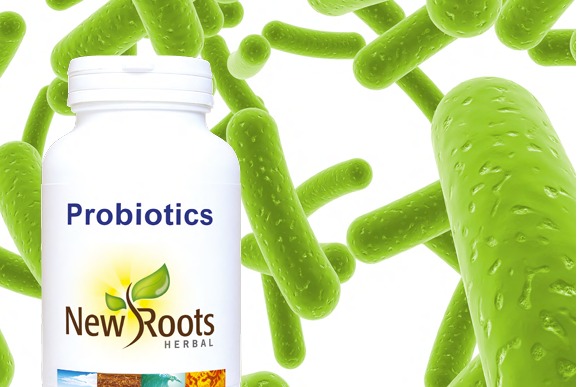
For NTs and FM practitioners, the number of Colony Forming Units (CFUs) on the label is the least useful number. What determines clinical outcome is strain origin, site-specificity, and critically the synergy between strains, not any single strain in isolation. This is where formula choice, not strain-by-strain analysis, becomes the real clinical decision.
Why synergy is the mechanism that matters. Probiotic strains don’t act independently in the gut – they interact. One strain can enhance another’s adhesion to the mucosa, cross-feed metabolites that support a neighbouring species, or extend the pH/bile tolerance of the group as a whole, improving overall survival through the GI tract. A single high-CFU strain thrown into a formula alongside others with no rationale for how they behave together isn’t a synergistic formula. The clinical effect depends on strains being selected to work as a system.
New Roots Herbal has already done this reasoning for you. A multidisciplinary team of naturopathic doctors and scientists builds every formula around how strains behave together. This includes the origin matched for the target site, complementary in mechanism, combined specifically to strengthen rather than dilute each other’s action. That’s the difference between a strain list and a designed formula. The formula selection is the clinical decision, because the strain-level thinking is already built in.
Origin dictates colonisation, not just survival. Human-origin strains have demonstrated capacity to survive gastric and bile transit and colonise multiple sites across the full GI tract. Dairy-origin strains address pathogen inhibition and lactose-digesting support; plant-origin strains such as L. plantarum address gas-producing dysbiosis and carry independent cardiovascular data.
And the underlying evidence is strain-specific, not species-wide — worth reinforcing with clients who’ve been told “any probiotic will do”:
- B. infantis — IBS pain, bloating, transit regulation, IL-10/IL-12 modulation
- L. helveticus R0052 + B. longum R0175 — RCT data on depressive symptom reduction and restored intestinal permeability post-inflammatory insult
- L. plantarum — atherosclerosis risk, cholesterol, blood pressure
- S. boulardii — non-pathogenic yeast, specific antagonism to C. diff and E. coli, traveller’s and antibiotic-associated diarrhoea prevention
Colostrum adds a second mechanism. Where proline-rich-polypeptide-rich bovine colostrum is included, you’re layering immunoglobulin-mediated pathogen defence with direct repair of the epithelium. Benefiting inflamed, permeable or reactive presentations, not maintenance cases.
Find more information in the New Roots Herbal Probiotics Guide — download here